Why Specialty Roasters Are Adding Fine Robusta to Their Espresso Blends

Robusta carries a reputation problem built on commodity lots. Fine Robusta is a different proposition — and a growing number of roasters are testing it in espresso blends. Here is what it contributes, how to trial it, and what to ask a supplier before you buy.
What Robusta brings to a blend
Body and crema. Robusta is dense and gives a thick, persistent crema, which is why it has long featured in traditional espresso blends.
Caffeine. Robusta contains roughly twice the caffeine of Arabica, which matters for blends marketed on strength.
Structure. A chocolate and nut base that supports brighter Arabica components in milk drinks and espresso.
Why “Fine” changes the equation
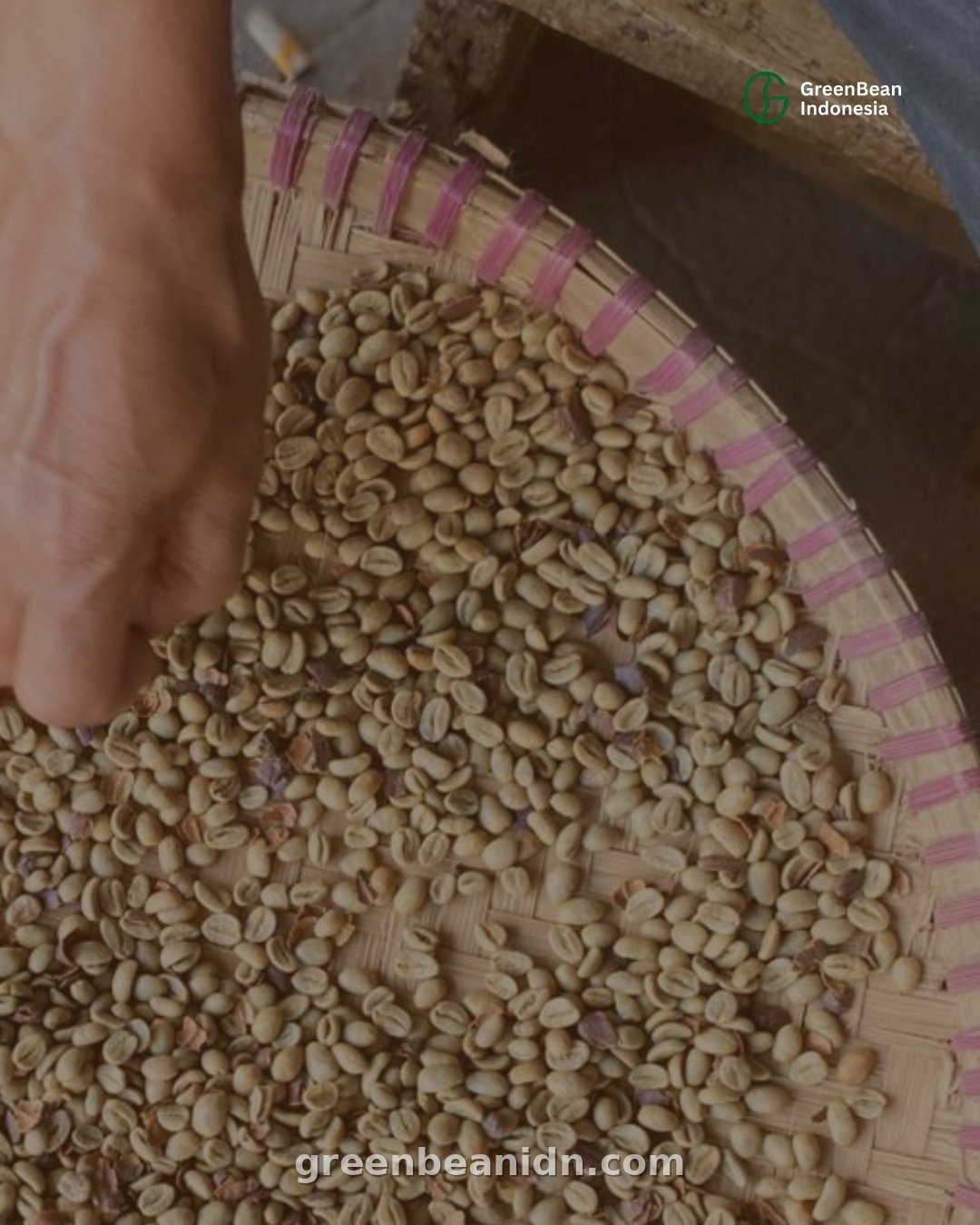
Commodity Robusta forces you to work around harsh, rubbery, burnt notes. Fine Robusta — grown at altitude, selectively harvested and carefully processed — gives the body and crema without those penalties. Our Temanggung Natural Fine Robusta cups with dark chocolate, ripe stone fruit and tobacco leaf, a full body and a clean finish, and blends cleanly with washed Arabica without muddiness.
How much to use
There is no universal ratio. Roasters commonly trial Fine Robusta at around 10–20% in specialty-leaning blends, and higher in traditional espresso styles. Start low, cup it against your current blend, and adjust in small steps.
Roasting notes
Robusta is denser than Arabica and behaves differently in the roaster, so trial it on small batches. Some roasters roast Robusta separately and blend afterwards; others co-roast. Test both approaches with your own equipment and judge the results in the cup.
Price and margin
Arabica prices can swing sharply. Robusta is generally priced below Arabica, so a dependable Robusta component can help steady the cost of a blend without giving up cup quality — provided the Robusta is clean.
The menu story
“Single-origin Fine Robusta from the highlands of Temanggung, Central Java” is a menu line that earns attention. Named, traceable Robusta is still unusual in many markets, so roasters who adopt it early can own that story.
What to ask a supplier before you buy
- The SNI grade, defect count and moisture of the lot, on a data sheet
- A sample you can cup, and a pre-shipment sample that matches it
- Consistency between lots and harvests
- Which processor produced the lot (traceability)
- The export documents that will accompany the shipment
Our Temanggung Natural Fine Robusta
Single origin, natural process, 800–900 m, sun-dried, maximum 3% Category 1 defects. Specifications are on Our Coffee; a sample comes with a lot data sheet.